Monday, January 17, 2022

From the Beat: Goodbye, Grobber


I suppose every person must reconcile Pluto’s standing in our solar system at some point. That frozen sphere on the outskirts of our neighborhood has been a source of speculation for the better part of the last two decades after scientists first indicated that Pluto might not, in fact, be a planet. In an age where identity is everything, this change in planetary designation dwarfs any concerns about bathrooms signage or pronoun usage we mere humans can manage.

Two great scholars of our time have tackled the issue. The first I was aware of was Les Grobstein. 

Anyone who works nights knows that there is a different rhythm to the world when you are awake while the rest of the world is asleep. My shifts at SVM were a strange combination of second and third shift, and often I was driving home at 2 AM or 3 AM, and the voice riding along with me was the Les Grobstein, the overnight host for 670 AM The Score, the sports talk radio station based out of Chicago.

Grobstein, 69, who died on Sunday, was an eccentric callback to radio days of yore. He spent most of his shows taking calls from the eclectic night birds of the upper Midwest between dropping detailed accounts of any and every sporting event of the last fifty years. Grobstein had an encyclopedic memory, and he never hesitated to display it. He had antiquated radio bits like “Bum of the Week” and sometimes a caller’s joke was lost on him, but it all fit into the overnight vibe beautifully. He did the show five nights a week, often from 10 PM to 5 AM, and often, he did them alone. In contrast, most of the daytime hosts have three hour shows and they are often two-person on-air crews with a slough of support staff and guests.

I met Grobber twice in my days as a sports scribe, both times at Soldier Field. One time I rode the elevator to the press box with him, admiring the vintage tape recorder he slung over his shoulder. He talked a lot, including an unusual amount of swearing for a guy that spent so much time on the air, but he was affable and friendly to every face in the media box whether they worked for the Chicago Tribune or a little paper like SVM.

Anyways, Grobber was the biggest proponent of Pluto, never hesitating to ridicule a caller or any scientist that dared deprive that glorious sphere of its title as a planet. He would get legitimately upset about the issue, something I must confess to never truly understanding. Perhaps, a change like this disrupted some coding in Grobber’s encyclopedic mind. Maybe he was just passionate about the planet. Or maybe, like so many of us, it just feels like this world and universe too often changes too much and too fast. We want to cling on to everything that was fact and feel assured that it will be fact for eons after we’re gone. Maybe it gives us comfort, hoping that our own memory will have a similar lasting standing.

Here is a link to Grobber talking about Pluto: Boers and Bernstein: Les Grobstein Discusses Pluto's Dwarf Planet Status - YouTube

I don’t think Grobber had to worry about his place in the sports solar system. From the outpouring of support on social media, it's easy to see he’s left an indelible impact on the sports scene in Chicago and around the country. I know he’ll always be part of the wealth of memories I’ll keep from my time at SVM.

Oh, the other scholar to tackle the Pluto issue. Well, another Illinoisian, of course. John Prine. He handled it with a little more humor in the song “The Lonesome Friends of Science.” I think a bit from the lyrics is an appropriate way to end this post. Goodnight, Grobber. I look forward to tuning you in on the other side.

Poor old planet Pluto now
He never stood a chance no how
When he got uninvited to
The interplanetary dance
Once a mighty planet there
Now just an ordinary star
Hanging out in Hollywood
In some old funky sushi bar


The lonesome friends of science say
The world will end most any day
Well, if it does, then that's okay
'Cause I don't live here anyway
I live down deep inside my head
Well, long ago I made my bed

 (All right to John Prine and Oh, Boy Records). 

Link to the song: https://open.spotify.com/album/13UwfQZqne7ZQIkUZsAPLg?si=0_xlKSewRBeVL7diD2EMZA

Thursday, January 13, 2022

2021 Books in Review: Part 5


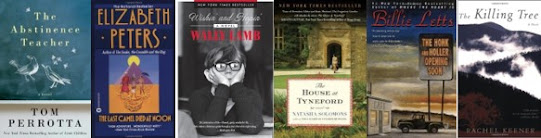
The Abstinence Teacher by Tom Perrotta

Synopsis: High School Sex Education teacher Ruth Ramsey finds herself in the crosshairs of her community’s conservative evangelicals after making a flip remark during a class. She also crosses paths with one of them on a personal level, Tim, her daughter’s soccer coach who is also a recovering addict.

My thoughts: This is an example of taking a current issue and creating a narrative around it. The reviews I read, and I probably would have to agree, is that it was a bit on the nose, and not surprisingly in this day and age, lacked the voice reason between to the opposite points of view. I guess being raised Lutheran, I thought the Christian side was handled with a heavy hand. I think a book with the goals of this one needed something to balance the discussion, and the character of Tim just doesn’t live up to that.

The Last Camel Died at Noon by Elizabeth Peters

Synopsis: Egyptologist Amelia Peabody and her family find themselves stranded in the desert while trying to rescue a wealthy heir in search of his long-lost relatives.

My thoughts: I know this genre has a huge following, but the combination of this being a diary and the voice being Victorian just made this a stagnant and at times irritating read. Just felt to me like this book (published in 1992) and its ilk just haven’t aged well. The diary aspect removes any suspense (well, of course they make it, since she’ writing about it), and the time-period voice feels condescending.

Wishin’ and Hopin’ by Wally Lamb

Synopsis: This is humorous story follows fifth grader Felix Funicello, a distant cousin of Annette Funicello, as he navigates the holiday season.

My thoughts: The tone of this is completely different from the other Lamb novel I read, which was dark. I think this is a lesson in how to tell a story and not let the writing get in the way. The style is direct, and the voice is spot on for the subject matter.

I’ve also read by Wally Lamb: She’s Come Undone

The House at Tyneford by Natasha Solomons

Synopsis: Nineteen-Year-old Elise Landau flees from Vienna in 1938 to England, trading a life as the daughter of an opera singer and writer to that of a parlor maid. The backbone is the early stages of the WWII and the secondary theme is the transition away from the traditional English social system.

My thoughts: This hits many of the beats of a WWII era narrative, and does it well. While a love story ensues, there is some misdirection, and the overall story is the reconnecting of Elise with her sister, the lone remaining member of her family to survive the Nazi occupation of Austria.

The Honk and Holler Opening Soon by Billie Letts

Synopsis: An ensemble cast of characters come together around the sleepy Oklahoma diner known as “The Honk and Holler Opening Soon.” The heart of the story is the budding relationship between the diner’s owner Caney Paxton and the mysterious newcomer Vena Takes Horse.

My thoughts: I enjoy this sort of slice of life, set piece stories where literary themes and aspirations are put to the litmus test of ordinary people living ordinary lives. Some of the language and treatment of minorities might be a bit outdated in this era, but it also lends to the realism of the narrative.

The Killing Tree by Rachel Keener

Synopsis: Recent graduate Mercy Heron falls in love with the wrong boy and finds out how influential her domineering grandfather is in their small Appalachian community.

My thoughts: While I liked this book, and it didn’t hesitate to swim in the symbolism pool for long periods. Symbolism isn’t my strength as a writer or a reader.

Monday, December 27, 2021

2021 Books in Review: Part 4


Cloud Atlas by David Mitchell

Synopsis: Boiling this one down to a few sentences is near impossible. The narrative is five separate stories told in very different styles with the idea of reincarnation being the skeleton connecting the characters from different time periods. Again, there’s so much going on in terms of plot, symbolism, and theme that nothing I write here would do it justice.

My thoughts: This would be a book I’d like to have studied in a class because I’ll be the first to admit that I’m not smart enough to fully get it all. It’s a study on how to tell a story – or how many ways you can tell a story from letters to an interview, to spoken word narrative, to classic mystery novel first-person limited POV, to film, through music. This book is a challenge, and if you like challenging reads, I’d recommend this one.

A Tree Grows in Brooklyn by Betty Smith

Synopsis: This is the semi-autobiographical story of a young Irish girl growing up poor in New York in the early 1900s. The part that sticks with me is the scene where she and her brother must get vaccinated for smallpox. It was mandatory (yes, people forget that vaccines being mandatory is nothing new and this was the early 1900s when medicine had less idea of what they were doing), and most poor people and immigrants thought the vaccine was really a ruse to exterminate them. It was such a relevant scene even though it was written like sixty years ago.

My thoughts: Having read Angela’s Ashes, I sort of struggled to get into this one, as it felt like another version of the poor Irish immigrant in New York story. That being said, it had a great, straightforward voice, capturing the world through the eyes of a teen girl.

Stardust by Neil Gaiman

Synopsis: This is a semi-dark fairy tale about a teen boy, Tristran Thorne, venturing into the land of Faerie to recover a fallen star for the girl of his dreams. The star, once fallen, takes on a human form, and is also being hunted by a witch, who needs to take the star’s life to prolong her own.

My thoughts: I previously read American Gods by Gaiman, and while this book and that fall loosely under the same general genre, this one is not nearly as heavy or dark. This holds the fairy tale voice even when things do get dark, and that made it a relatively quick read.

I’ve also read by Neil Gaiman: American Gods

Broken Harbor by Tana French

Synopsis: Dublin Murder Squad Detective Scorcher Kennedy is assigned a case that appears to be a murder-suicide involving a father, mother and two children. The catch being the murder takes place in the same area of Ireland where Kennedy’s family vacationed when he was a child and where his own mother died from suicide.

My thoughts: French has developed a series of mysteries, always pulling a detective from a previous book to be the lead in the next. Her other trope is that the new lead detective always is assigned a case that brings back memories from their own past traumas. French has a great style, but I am hoping that she can break away from the crutch of the main detective character falling completely apart by a case with ties to their past. I mean, how many times could that happen in one unit.

I’ve also read by Tana French: Into the Woods, The Likeness, Faithful Place

Places in the Dark by Thomas H. Cook

Synopsis: Dora March arrives in Port Alma, Maine in 1937, and within a year, she has altered the lives of two brothers – leaving one dead and the other on the verge of madness.  

My thoughts: This is a concisely written story with a nice twist at the end. I didn’t have high expectations for this one going in, as it had sat in our pile of books for a couple years, but it proved to be one of my favorites of the year.

Tuesday, December 21, 2021

2021 Books in Review - Part 3


The Winter People by Jennifer McMahon

Synopsis: When Ruthie’s mother disappears from their rural Vermont home, she and her younger sister, Alice, confront the tragic and dark history of the home that includes the disappearance of another woman almost one hundred years earlier.

My thoughts: This is a well told horror story, the strength of which benefits from various storytelling methods including flashbacks told through the diary of the woman lost nearly one hundred years earlier. The shifting in time and style helps build the suspense.

Pilgrims by Garrison Keillor

Synopsis: Mr. Keillor takes some of his Lake Wobegon characters and sets them on the task of decorating a native war hero’s grave in Italy. The main character, Marjorie Krebsbach spearheads the trip in an attempt to save her flailing marriage.

My thoughts: Keillor has an authentic Midwestern voice, which appeals to me. His characters are mirrors of those I’ve grown up around, people with interesting stories who seldom want any sort of attention drawn to them.

I’ve also read by Garrison Keillor: Lake Wobegon Days, Pontoon, Lake Wobegon Summer of 1956, Wobegon Boy

Animal Dreams by Barbara Kingslover

Synopsis: Codi Noline returns home to tend to her dying father and confront the ghosts of her past. She winds up falling for an Apache trainman and discovering an environmental catastrophe that is quickly eroding the town’s way of life.

My thoughts: Kingslover is an intimidating read as a writer, her stories are well-weaved with threads of plot, symbolism, theme, and heart. Her books are explorations of humans, the world, and life.

I’ve also read by Barbara Kingslover: The Bean Trees, Pigs in Heaven, The Poisonwood Bible, Prodigal Summer, The Lacuna, Flight Behavior, High Tide in Tuscon

Into Thin Air by Jon Krakauer

Synopsis: This is Krakauer’s retelling of his ill-fated ascent of Mount Everest in May of 1996. A sudden storm plus some questionable decisions made by guides cost numerous lives and left those remaining guilt-ridden and pointing fingers at what went wrong.

My thoughts: Krakauer’s other books have been in-depth investigations of others, while this one put Krakauer right into the middle of the story. While this book received criticism from some on the ascent, most have accepted he portrayed things as accurately as possible, considering he also was delirious from the altitude and exhaustion for parts.

I’ve also read by Jon Krakauer: Into the Wild, Under the Banner of Heaven

Rainwater by Sandra Brown

Synopsis: David Rainwater checks into Ella Barron’s boarding house in Depression Era Texas, and soon the strain of the times explodes in the small town as racial and economic tensions boil over. The independent Ella also becomes drawn to Rainwater, who takes an interest in her autistic son.

My thoughts: This hit all the points for a historical fiction romance. I got the sense it was a departure from straight romance for the author, and probably could have been further developed for an even deeper story about the times and how those times apply to today’s world.

Thursday, December 16, 2021

2021 Books in Review - Part 2


The Bazaar of Bad Dreams by Stephen King

Synopsis: This is a short story collection, most of which deal with mortality in one form or another.

My thoughts: While this might sound wrong considering King might be the most prolific novelist of this era, I think he might be at his best in the short story realm. It keeps him grounded, it limits the amount we see his monsters, and focuses his ideas. Not that I don’t like many of his novels, it’s just his short stories always seem to have more impact.

I’ve also read by Stephen King: Too many to list. Some are hits, some are misses. I’d recommend the Dark Tower Series, The Stand, and any of his short story collections including Night Shift.

A Son of the Circus by John Irving

Synopsis: I don’t think I can do any better than this from Goodreads about this book, it’s a “pandemonium of servants and clubmen, dwarf clowns and transvestite whores, missionaries and movie stars. This is a land of energetic colliding egos, of modern media clashing with ancient cultures, of broken sexual boundaries.”

My thoughts: John Irving always puts the magnifying glass in places most other writers never seem to consider looking. He creates characters from a variety of backgrounds with interests ranging the spectrum. I always get done with his books and wonder how a mind could ever conjure such limitless boundaries to their real-world tales.

I’ve also read by John Irving: A Prayer for Owen Meany, The World According to Garp, The Cider House Rules, A Widow for One Year, Until I Find You.

I Was Told There’d Be Cake by Sloane Crosley

Synopsis: This is a collection of creative nonfiction essays portraying the struggles of the author as she continually reaches for the stars but comes up short.

My thoughts: My favorite writing course in college was Creative Nonfiction, and the columns and features I wrote at the paper tended to veer in that direction. Just like reading short story collections, I like books like this to explore another way to tell a good story. I wouldn’t say this was my favorite collection, certainly not on the level of some of Chuck Klosterman’s collections, but it still had its humorous and poignant parts.

Disobedience by Jane Hamilton

Synopsis: Seventeen-year-old Henry Shaw discovers that his mother is having an affair when he starts reading her emails. His relationship with his mother becomes strained, yet he keeps the secret from his father and younger sister.

My thoughts: Again, I like to see how different approaches to common arcs influence a story. There are plenty of stories of infidelity, but few told through the eyes of a son, whose knowledge comes from spying on his mother’s emails. It creates an interesting dynamic and tension which is magnified by the behavior of the other characters, including the sister who is an avid Civil War reenactor.

I’ve also read by Jane Hamilton: A Map of the World

American Nerd by Benjamin Nugent

Synopsis: This is a combination of an academic analysis of the nerd stereotype in media, literature, schools, and the general public, and Nugent’s application of this knowledge to his own level of nerdiness and its roots in his childhood.

My thoughts: I wanted this to be better, but I think he needed to pick a lane. The academic side, while at times interesting, dragged, and the personal essay portions all seemed kicked to the last half or third of the book and felt like they missed the mark at times. I’ve certainly had ideas like this and struggled to find the best way to turn the idea into a narrative.


Tuesday, December 14, 2021

2021 Books in Review - Part 1


2021 Books in Review – These are the books I read in 2021. This is the first in a five-part series.

I’m not going to provide reviews for the books, as I don’t think reviewing is something that I do particularly well, or that I am equipped with the knowledge to do so. I am going to provide a brief synopsis, and then provide things I think about as a writer when I am reading.

In the Garden of Beasts by Erik Larson

Synopsis: This is an analysis of William Dodd’s time as America’s ambassador to Germany during Hitler’s rise in the 1930s. Dodd, an academic, sought an ambassadorship with the hopes it would allow him time to work on a book. Instead, he was a witness to the rise of Hitler’s power. His daughter, Martha, has relationships with Nazis and a Russian spy.

My thoughts: Larson writes historical non-fiction and does so in a way that he pieces together various streams of data into a narrative. Having worked in media, I know how hard it can be to organize information and translate it into a coherent narrative.

I’ve also read by Erik Larson: The Devil in the White City – this entangles the story of the World’s Fair in Chicago with the life of serial killer H.H. Holmes.

Slaughterhouse Five by Kurt Vonnegut

Synopsis: Billy Pilgrim is unstuck in time. A survivor of the firebombing of Dresden, Pilgrim believes that he travels through time, has been abducted by aliens, and I am sure a dozen other things that I am forgetting.

My thoughts: When I read Vonnegut, I feel like he just pulls words and ideas and characters from a hat and then puts them in order. Yet, he does it brilliantly with both poignancy and humor. I feel like I could have written with similar wit when I was younger, but I would never have been able to make it as meaningful.

I’ve also read by Kurt Vonnegut: Breakfast of Champions

The Best American Shorts Stories (2002)

Synopsis: Really, no point for a synopsis. It’s a collection of short stories with a wide range of topics and ideas.

My thoughts:  If you want to write, I recommend reading short story collections because it’s a great way to learn the variety of ways that fiction can be approached.

White Oleander by Janet Fitch

Synopsis: Astrid is a teenager being shuffled through the Los Angeles foster care system after her mother is imprisoned for the murder of a former boyfriend. The root of Astrid’s problems come from being raised by narcissistic mother and without a father. She lacks a foundation to develop and careens from one bad relationship and situation to another.

My thoughts: A year before this one, I read “The Goldfinch” with the similar theme of the abandoned child trying to survive in tough environments. The Goldfinch is told from a male perspective, so it was interesting reading the approach for this one through the eyes of a female.

A Man Called Ove by Fredrik Backman

Synopsis: All that Ove wants to do is die, but he keeps getting entangled in the lives of his new neighbors and bothered by a stray cat.

My thoughts: Backman is Scandinavian and so translations always are interesting from a reading and writing point of view. There are customs and mores than are slightly different than ours. Expressions sometimes come off wonky. Even so, Backman’s voice rings true and sincere. His stories are always about ordinary people answering the bell when extraordinary events occur, and he illuminates the bonds that tie all of us together.

I’ve also read by Fredrik Backman: My Grandmother Asked Me to Tell You She’s Sorry, Britt-Marie was Here.

Thursday, December 9, 2021

Pandemonium Season 1, Episode 4: Settin’ the Woods on Fire (1988)


Joe Elliot’s house was a two-story redbrick mansion with a wrap-around porch, the garage had four stalls, and his shed, where he kept a bevy of mechanical toys and farm equipment, was big enough to house a football field. The driveway was a hundred feet long, paved to the highway, and not a damn blade of grass was out of place on the palatial estate. Ricky Dean Glenn flicked his cigarette into the lawn, stepping onto the property, his knees aching from the walk and his temper flaring. 

The Orange Blossom Special was parked on a cement pad before the shed’s giant sliding doors. The sun hit the mirrors and the rear pointed slightly up just like the Korean whores Ricky visited back in his war days. He’d got laid three times in Korea before his first kill, but that number evened out eventually and then swayed greatly in the direction of kills by the time he was discharged. A guy like Ricky can only take orders for so long, and while there certainly was a thrill to killing, even that was dulled when done daily for no apparent reason. He learned in Korea that the army was great at killing, but not much else. So, he got the fuck out and never looked back.

While Ole Ricky was finding out about whores and killing in Korea, guys like Joe Elliot made money and had kids, too much of both from what Ricky could tell. The greedy bastard was standing next to the truck in a checkered shirt and blue jeans, the perfect image of some asshole politician on TV trying to sell himself as a farmer. Joe’s gut plunged out before his waistline, his brown hair was combed over his balding dome, and his boots were entirely too clean to be those of a man doing real work. Beside him was his junior, or the youngest of the Elliot clan of juniors. A boy with a wide base and shoulders, wearing a ridiculous cowboy hat and a pair of sneakers. The boy might have been sixteen, he might have been twenty, either way Ricky figured he was about ten ass-kickings away from being a man. Maybe Ricky would get him one closer in a few moments. 

“Well, well, if it ain’t Ricky Dean Glenn,” Joe said. Ricky was ten feet away, his steps were even, his shoulders square, and his jaw set. He only nodded. 

“Who the hell is this?” Joe’s son said, a toothpick dangling from his soft boy lips. 

“Local trash collector,” Joe said. “We don’t have any trash around here.” 

Ricky kept coming, no words, no change in expression. He had learned in the army that talking was for those that stay back in tents and make plans while the action is miles away. Ricky wasn’t made for that when there was action to be had.

“Is he deaf, or just stupid?” Joe’s boy said. His hands were in his jacket pockets. How could a man call someone stupid and keep their hands in their pockets? 

Ricky punched the boy in the mouth with his right fist, and he wasn’t sad when he saw that the fist drove the toothpick through the boy’s upper lip and into his nose. There would be a mark, nothing major, but a mark just the same, and each time that stupid boy looked in the mirror, he would remember getting his clock cleaned. 

The boy landed on the cement with a thud, his eyes rolling back in his head. Ricky supposed the boy had never been hit before and would run the other way whenever anyone else near him ever balled their hand into a fist for the rest of his pathetic life. 

“Jesus, Ricky,” Joe exclaimed. “What the hell has got into you?” 

Ricky took one step toward Joe, but the fat bastard backed off four. Never once did Joe Elliott lean down to see how his son was doing. Naw, he just scurried backward, too scared to care about anyone else. 

Ricky opened the Orange Blossom Special’s door and the key was in the ignition. A fancy looking metal Confederate flag emblem dangled from the key ring. Ricky reached in, grabbed the keys, and tore the flag off the chain. 

“Only idiots celebrate losers,” Ricky said. He whipped the flag emblem at the groggy boy on the ground before climbing onto the truck’s bench seat. 

“Hey,” Joe said as Ricky turned the engine over. Joe’s head swiveled on his neck, sure that someone had to be around to save him and keep his truck from being stolen. Guys like Joe always needed someone. A fella to do the hard work, the labor. Someone to cook. Someone to clean. Someone to wipe their butts. Someone to win their battles. The Joe Elliotts of this country were in charge, they just didn’t understand how unsteady that pedestal was that they were perched upon. Ricky slammed the door and shifted into gear. 

“It’d be best for everyone to keep all this quiet until tomorrow, you hear.” Ricky eyed Joe like a sniper, making sure the fat bastard caught the drift that calling this in any earlier would mean more trouble sometime down the line.

Joe nodded, his chins jiggling, and Ricky hit the gas, spinning the tires and, leaving black marks on the cement before skidding out of the driveway.


Previously on Pandemonium Season 1:


2026 Writing Challenge: Gotta Have It!

  Note: Well, I haven't been keeping up with my 2026 Writing Challenge, but I promise I will keep trying/writing. Last night, Write On -...